"We're doing well. So why does our brand feel like it belongs to a maller company?"
That's how most rebranding conversations start at Generator. Very few of the companies that come to us are in trouble. They've added services, won bigger clients, maybe opened in a new country. The logo, the website and the way they describe themselves were made for the company they were five or ten years ago.
The short version: a rebrand closes the gap between what a business has become and what its brand still says. This article covers how to tell whether you need one, how we run it, and three established Saudi businesses we've helped catch their brand up with their ambition.
A redesign and a rebrand are different things
A redesign changes how a brand looks. A rebrand changes how a business is understood.
You can redesign your logo, website and brochures and still say exactly the same thing to exactly the same people. It will look fresher, and honestly, sometimes that's all a company needs. But if the real problem is that customers misunderstand what you do, or who you're for, new visuals won't fix it.
| Redesign | Rebrand | |
|---|---|---|
| Question it answers | How should we look now? | Who are we now, and who is it for? |
| Positioning | Stays the same | Redefined |
| Name | Kept | Usually kept, sometimes changed |
| Visual identity | Updated | Evolved from the new strategy |
| Messaging and voice | Mostly untouched | Rewritten |
| Architecture | Not addressed | Often restructured for groups and product lines |
When it's time to rebrand
There's no expiry date on a brand. Some last decades. Others stop fitting the business within a few years. The trigger should be a business reason, not boredom or a trend. These are the ones we see most.
You've outgrown the original brand
A company that started as a small specialist becomes a group working across several sectors, but its identity still feels like the small specialist. Clients who would trust you with bigger work never get that far, because the brand undersells you before anyone picks up the phone.
You look and sound like everyone else
Markets drift towards sameness. Competitors use the same words, similar colours and the same promises. When customers can't tell brands apart, they choose on price. Repositioning gives you ground that nobody else is standing on.
You're entering a new market
A brand that works in Cairo doesn't automatically work in Riyadh or Dubai, and the reverse is true too. Expansion is often the right moment to rethink positioning and visual language, while keeping what made the brand work at home.
Perception has fallen behind reality
Sometimes the business has already changed: better products, a stronger team, new technology. The market just hasn't noticed. The rebrand's job here is to catch perception up with the truth.
The hardest part: what to keep
Branding a new company is, in some ways, the easier job. You start with a blank page. A rebrand works around history. Customers already have expectations, employees have their own attachment to the old brand, and there may be years of reputation built into a name, a shape or a colour. Throw that away carelessly and you lose something you paid for.
So before anyone opens a design file, we ask a few plain questions. What about the current brand is still working? What no longer describes the business? How have the market and the customer moved? Which perceptions need to change, and which must stay recognisable?
When we rebranded Macrohat, the London smart home company, the new logo kept the bold, block-like geometry of the old one and refined it, so existing clients still recognised it. That single decision mattered more than anything we added.
How we run a rebrand
Every rebrand is a balancing act. Change too little and nobody notices you spent the money. Change too much and you throw away recognition you'll spend years rebuilding. Our process is designed to find that line.
1. Discovery and brand audit
We look at the existing brand from every angle: strategy, positioning, identity, messaging, digital presence, customer experience and competitors. We talk to the people who run the business and set what they tell us against what the market actually sees. The point isn't to criticise the old brand. It's to understand why it worked, where it stopped working, and what the next version has to do.
2. Strategic repositioning
This is the heart of the project, and where our brand strategy and positioning work comes in. We define the audience, the territory you want to own, the value proposition, the personality and the brand architecture. It all comes down to one question: what should this brand mean from now on? We don't start designing until that answer is clear.
3. Identity evolution
Now the strategy becomes something you can see. Depending on the project, that can mean evolving the logo, typography, colour, imagery, graphic language and motion into a full brand identity system. Novelty isn't the goal. The identity should express the new direction clearly and still work well in five years.
4. Messaging and voice
A new look paired with old language feels unfinished. We write the messaging pillars, tone of voice and brand story, so sales, marketing and leadership all describe the company the same way, in Arabic and English.
5. Rollout
Finally, everything has to live in the real world: the website, presentations, social media, signage, offices, internal documents. We plan the rollout so customers see one confident change, not a year of mismatched updates.
Three rebrands from our studio
All three are established Saudi businesses. Each had a brand that needed to catch up with where the company was going.
Tafeel: making complex technology feel clear
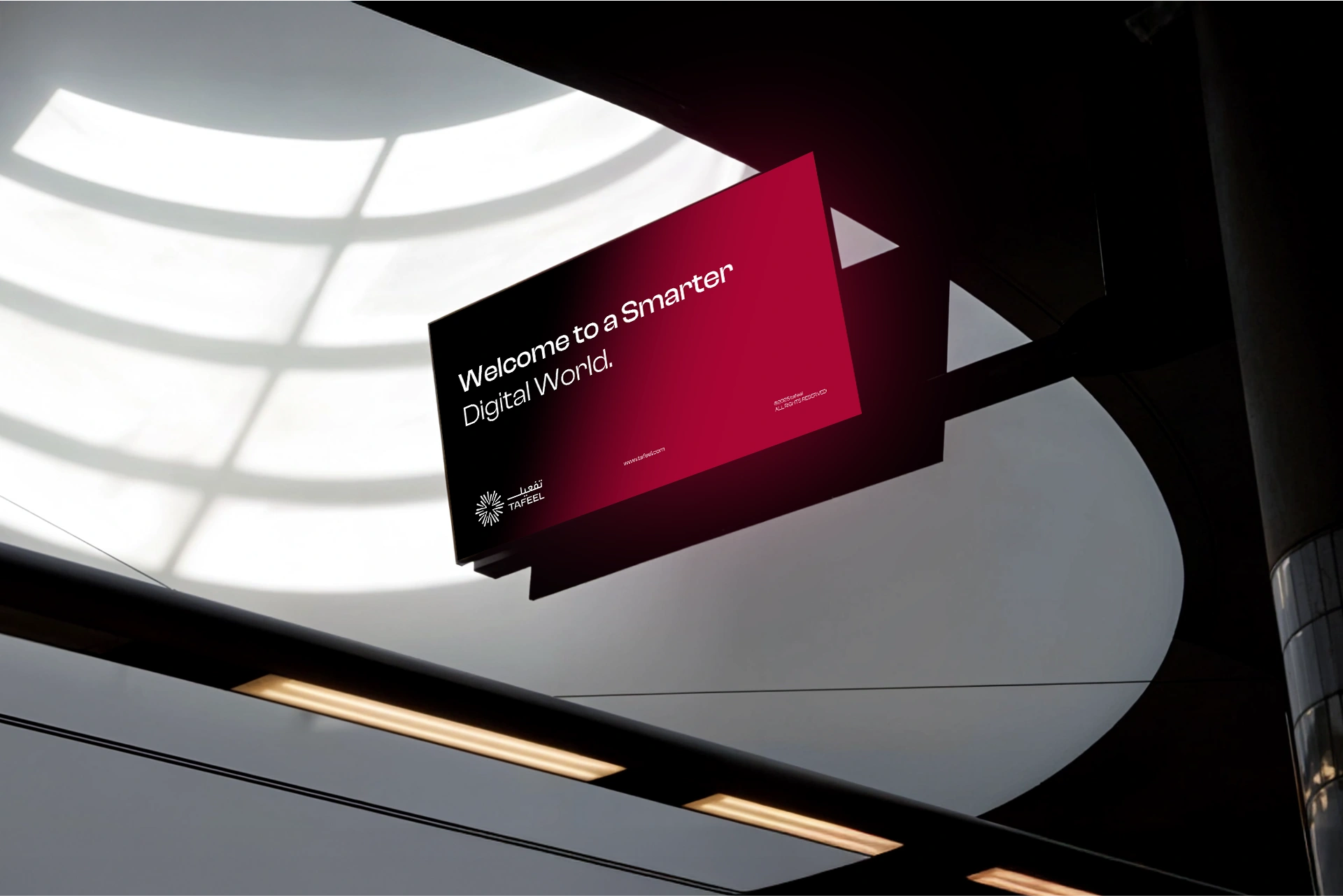
Tafeel is a Saudi digital transformation company working with government and private clients across cloud, cybersecurity, retail and healthcare. The technical ability was already there. What the brand wasn't doing was showing how well Tafeel makes complicated things simple for the people it serves.
We repositioned Tafeel as a company that opens up possibilities, rather than one that just installs systems. That idea shaped everything after it: a structured, minimal logotype, a modular system built around flow and clarity, a confident digital blue, messaging centred on the client's vision, a new website and full guidelines. After the rebrand, Tafeel won new government projects, onboarding B2B clients became smoother, and the team finally described the company the same way.
Athman Holding: keeping the legacy, losing the dust
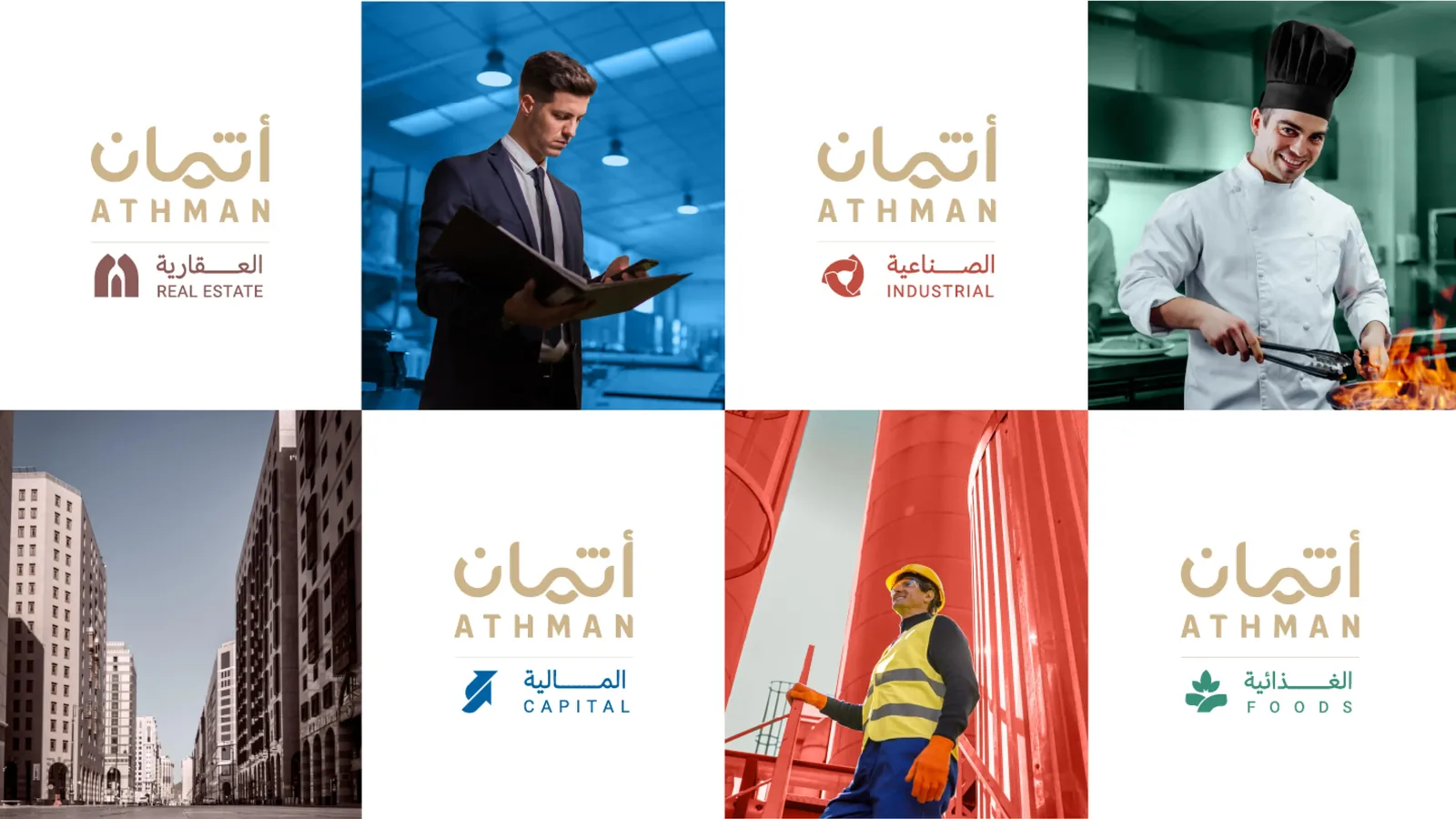
Athman Holding is a Saudi investment company with decades of business behind it. That history is a real asset, and the brief was clear about not losing it. Athman needed a brand that respected the legacy but felt current, and that could hold together across several subsidiaries.
We started by studying how local and global investment brands present themselves, then built the concept around three words: credibility, clarity and class. From there came a brand architecture that separates the holding company from its subsidiaries, a refined visual identity, a website and a detailed brand manual. Athman now looks as solid as it is, with room to grow into new sectors.
Rajhia Dates: a brand as big as the farm
Rajhia Dates has more than 200,000 palm trees and over 45 date varieties. That's a serious producer, and it needed a brand that said so. The goal was to balance tradition and modernity, show the care that goes into the farming, and hold a premium position against international competition.
We developed the positioning and a logo built on nature, growth and heritage. The visual language takes its cues from palm groves and desert landscapes. The packaging system adapts across product lines, and the guidelines keep it all consistent. The brand is ready for international shelves and still clearly rooted in Saudi agriculture.
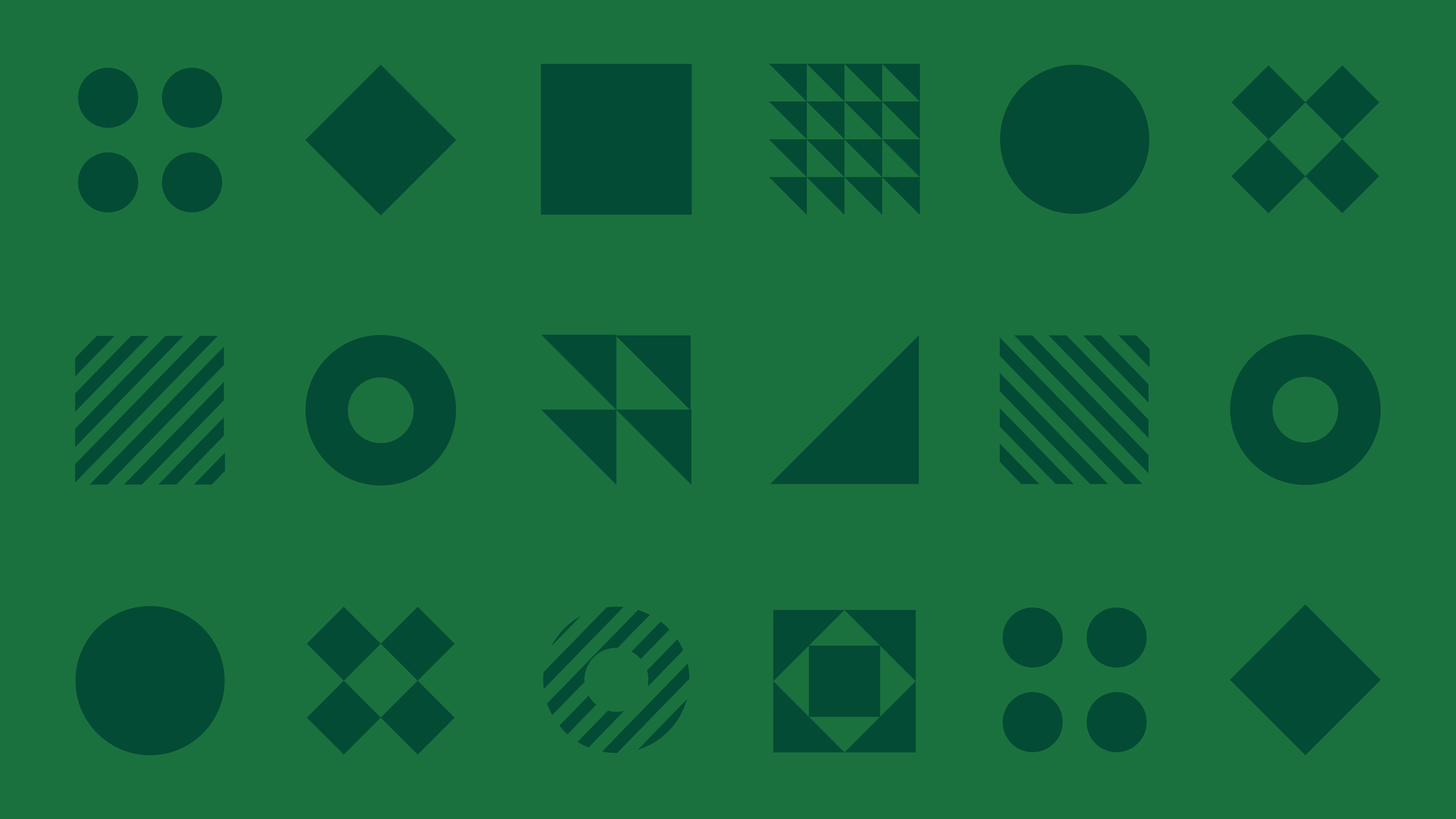
The Rajhia Dates visual language: palm groves and desert geometry, in three colourways.
Rebranding across Saudi Arabia, Egypt and the UAE
The pace of change in Saudi Arabia and the UAE has raised the bar for everyone. Local companies now sit next to polished regional and international brands, and customers compare them directly.
We see this often with Egyptian companies heading into the Gulf. The business is ready but the brand isn't, and the instinct is to erase anything that feels local. Usually that's a mistake. The better move is to find the parts of the brand that carry real, earned value and rebuild everything around them.
Getting that right means understanding both the culture and international brand standards, and knowing that Arabic has to be designed, not translated. If your rebrand is focused on Egypt specifically, our guide to the best rebranding agency in Egypt goes deeper.
How to choose a rebranding agency
Look at the portfolio, of course. But a beautiful portfolio tells you an agency can make things look good, not that it understands your business. A few things worth asking:
- What would you keep from our current brand? If the answer is "nothing," they haven't looked closely enough.
- What happens before the design? You want to see research and a clear position, not a moodboard on day one.
- Who owns the strategy and the final call? A named person, not a committee or a tool.
- How will the rollout work? A rebrand that stops at the logo leaves you doing the hard part alone.
- How do you handle Arabic? Ask to see Arabic that was designed, not translated.
The best test is simple: ask them to explain why something should change. If all they can show you is how it might look different, keep looking.
Common questions
What is the difference between a rebrand and a refresh?
A refresh updates how the brand looks: the logo, colours, typography. A rebrand changes how the business is understood: who it's for, what it stands for and how it competes. Many companies only need a refresh. The right answer comes from the audit, not from the brief.
Will we lose customers if we rebrand?
You can, if you change the wrong things or change everything at once. That's why we start by identifying what customers already recognise and trust, and protect it. A good rebrand should feel like the company grew up, not like it disappeared.
Do we need to change our name?
Usually not. A name carries years of recognition, and changing it is expensive. It makes sense when the name is legally unsafe, misleading about what you now do, or doesn't work in a market you're entering. Otherwise we evolve everything around it.
How long does a rebrand take?
It depends on scope. A focused visual refresh is much quicker than a full rebrand with new positioning, brand architecture, messaging and a website. We agree the scope and timeline together after the first discovery conversation.
Can you rebrand a group with several companies?
Yes. That's mostly a brand architecture question: how the parent brand and each company relate, what they share and where they differ. We did this for Athman Holding, separating the holding entity from its subsidiaries while keeping one clear system.
Has your business outgrown its brand?
We'd be pleased to talk through where your brand is today, what's worth keeping, and where it needs to go. Generator works with established and growing companies across Saudi Arabia and Egypt. It would be a pleasure to hear from you.
Branding & positioning Start a conversationGenerator Design Agency · Cairo, Egypt · Working across Saudi Arabia & Egypt · See more work · Our services