"Nobody chooses a clinic the way they choose a restaurant."
People come to a healthcare brand worried, or in a hurry, or making a decision for someone they love. A parent looking up a paediatric clinic at eleven at night is reading every word differently from someone browsing for a new phone. The medicine can be excellent and the patient can still leave the website unsure what the clinic does, what will happen at the first visit, or whether to call.
That gap is what a healthcare branding agency in Egypt is there to close. A logo, a calm colour palette and a tidy website help, but they're the visible end of the work. Underneath sits a clear position, a voice patients understand, and an identity that holds together from the Google listing to the reception desk. At Generator, every healthcare project starts with the organisation, its patients and its competitors, because the brand has to describe the care that's really there.
Put simply: a good healthcare brand helps patients understand the organisation behind the name.
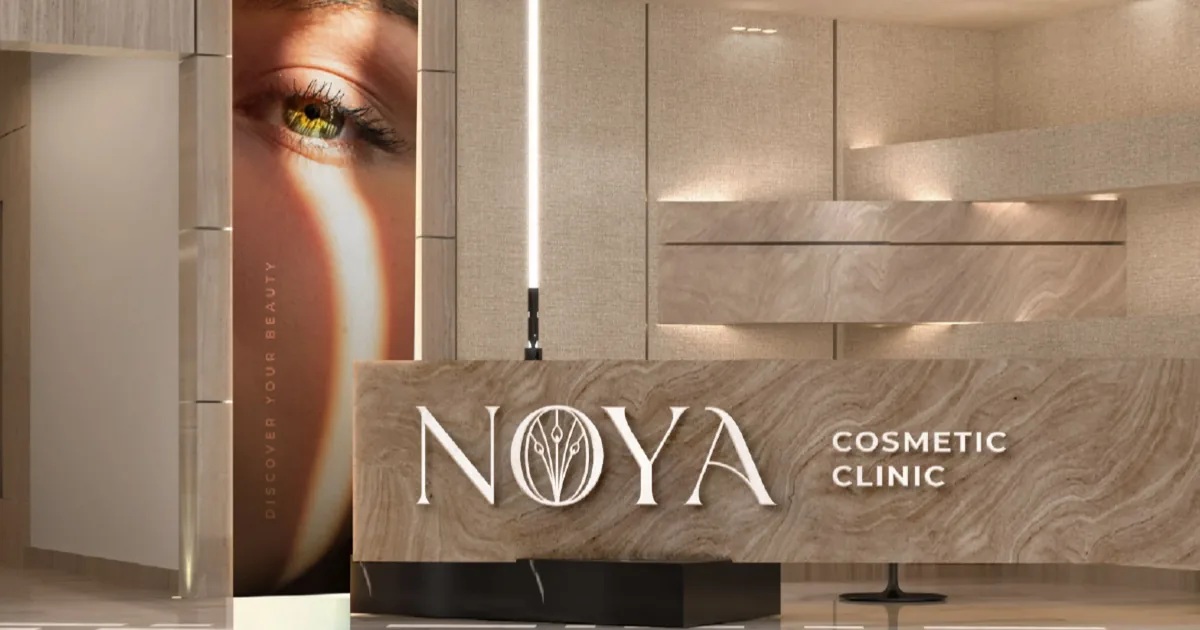
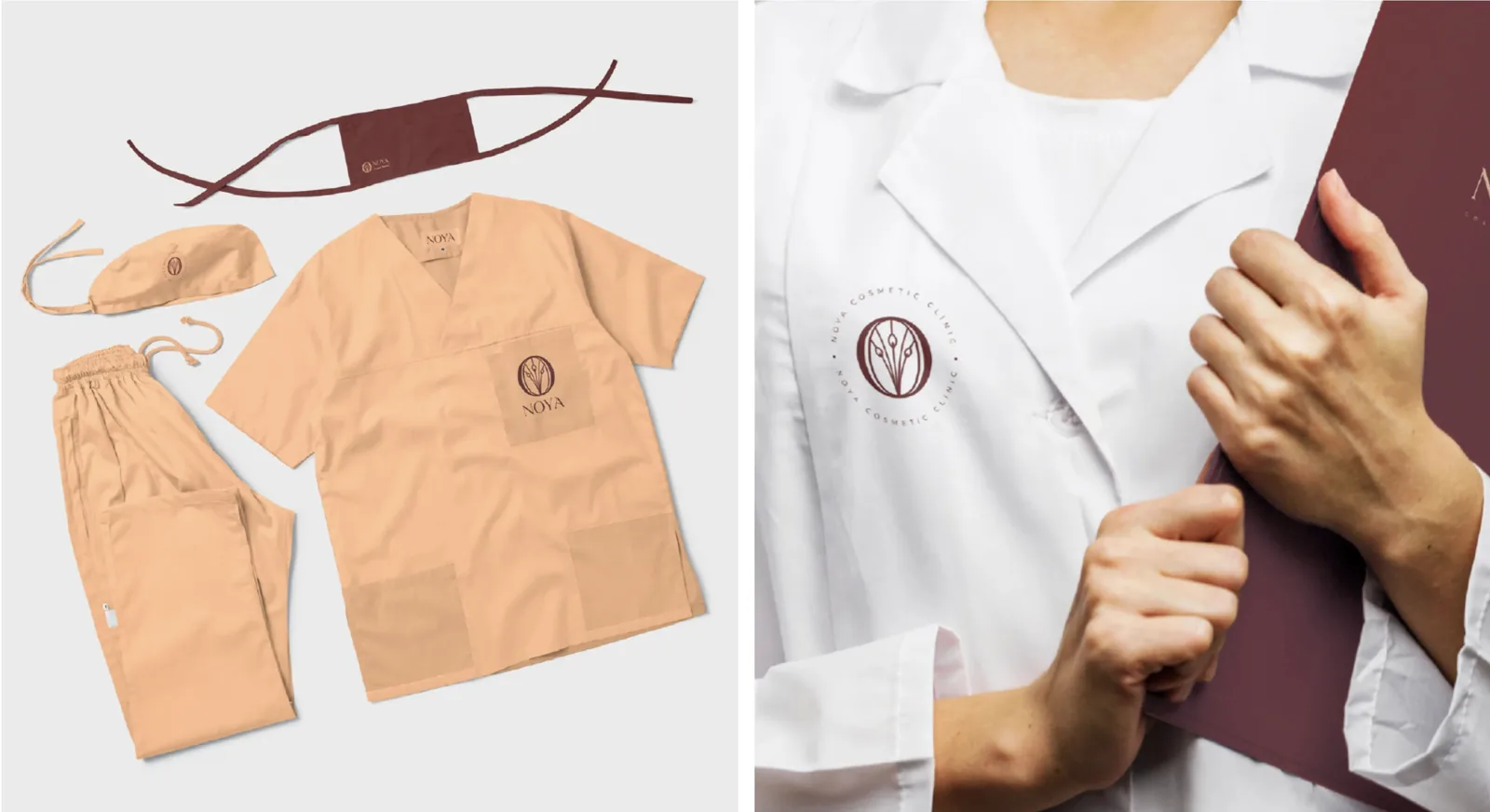
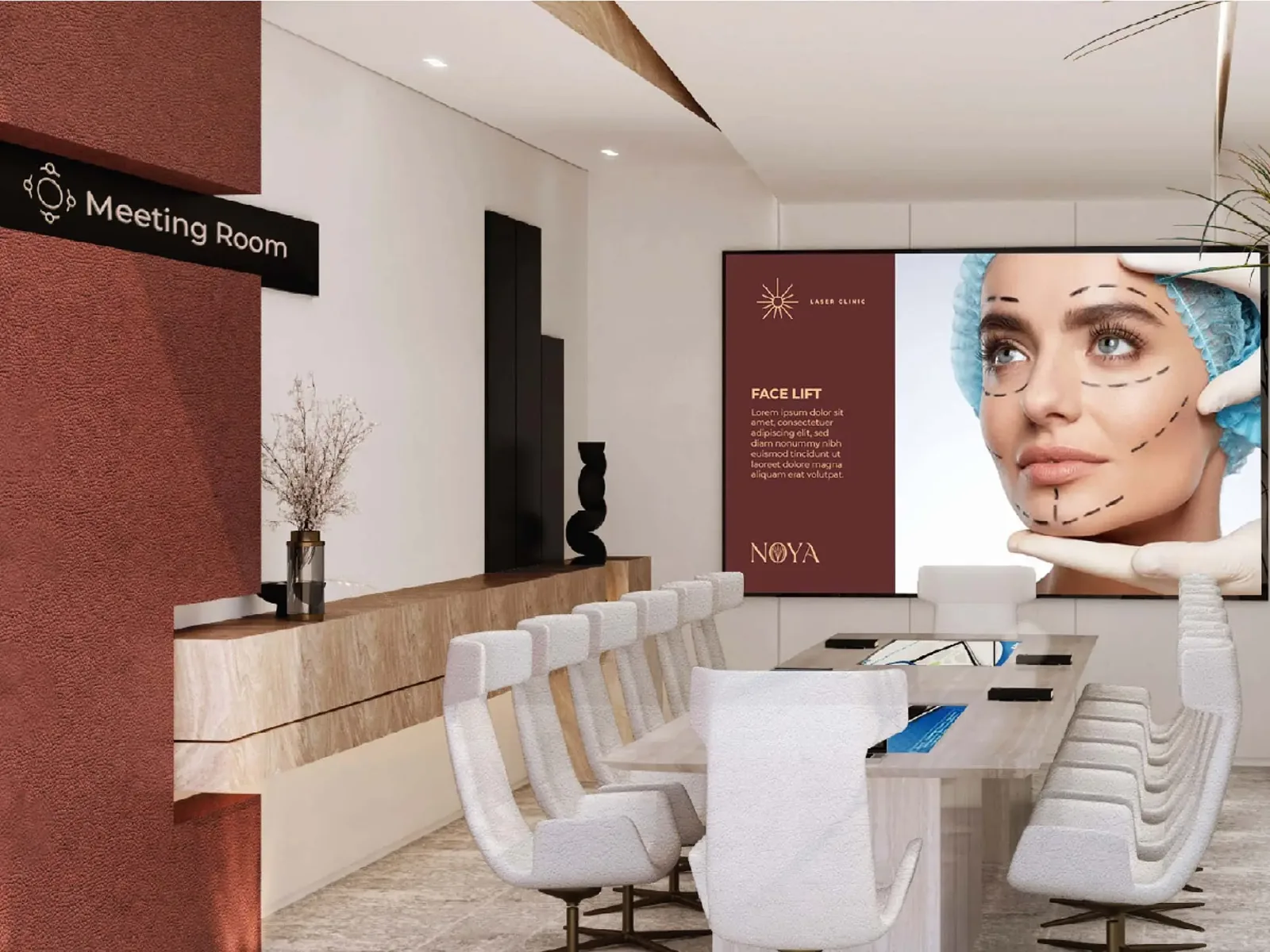
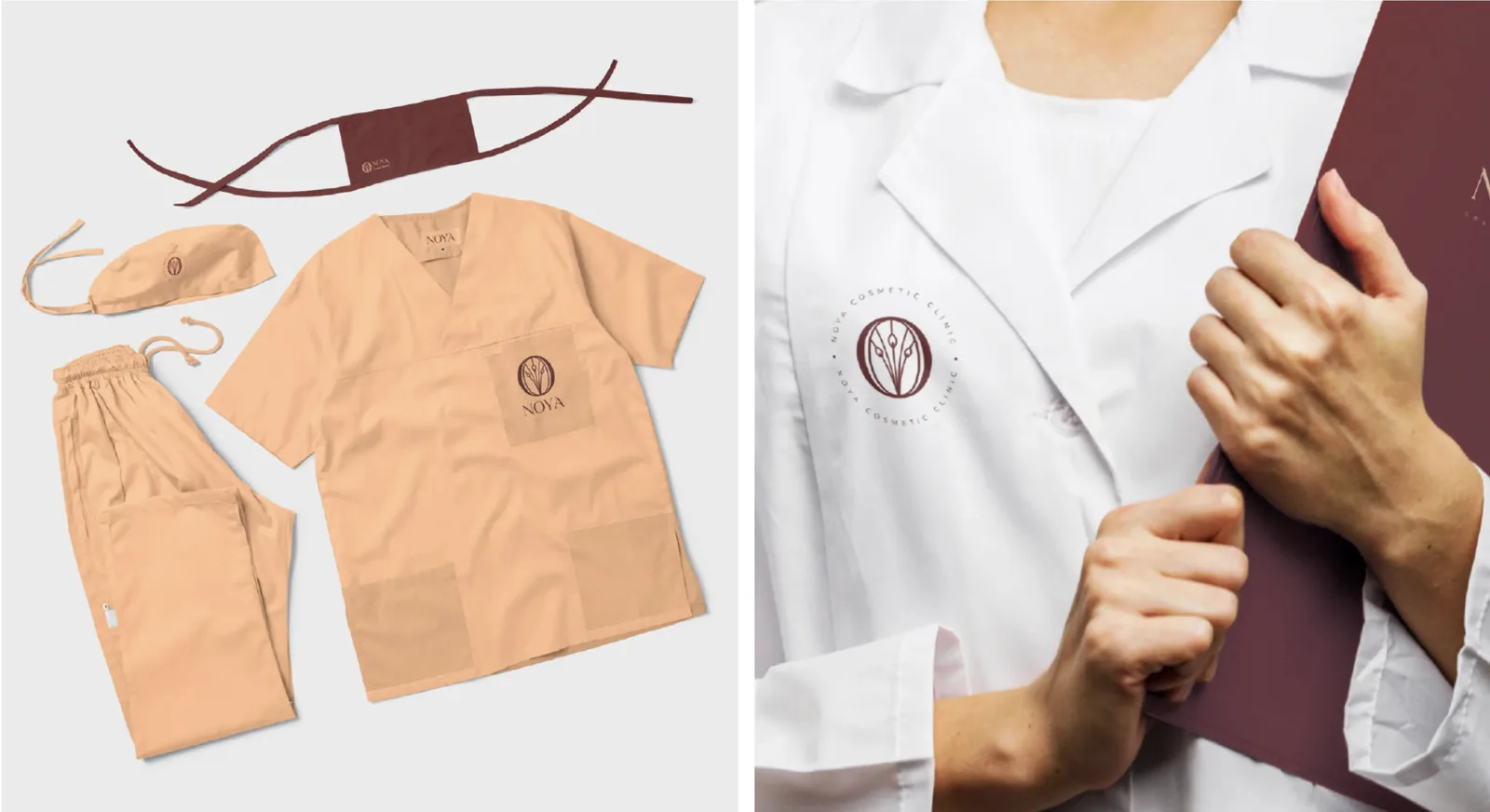
NOYA Cosmetic Clinic, Saudi Arabia: a healthcare brand built from the name up by Generator Design Agency.
Healthcare branding is not the same as healthcare marketing
Marketing brings patients to the door: campaigns, content, ads and booking funnels that turn attention into appointments. Branding decides what they find when they get there, and how the organisation is recognised before, during and after every visit. Both matter. They answer different questions.
| Healthcare marketing | Healthcare branding | |
|---|---|---|
| The question | How do we get more patients into our dermatology clinic? | What makes this clinic distinctive, credible and right for the patients it wants? |
| The work | Campaigns, social content, advertising, booking funnels | Strategy, positioning, naming, identity, tone of voice, guidelines |
| The result | Reach and enquiries | Recognition, clarity and a consistent patient experience |
Walk past any row of clinics in New Cairo or Sheikh Zayed and you'll read the same five promises: advanced technology, experienced doctors, high-quality care, patient satisfaction, modern facilities. All of them may be true. None of them tells a patient why this clinic and not the one next door. A clear brand strategy works out what the organisation can say with evidence behind it, and then makes sure every touchpoint says it.
What does a healthcare branding agency actually do?
It builds the strategic and creative system a medical organisation uses to present itself. Depending on where the organisation is, that can cover:
- Healthcare brand research and strategy
- Hospital and clinic brand positioning
- Medical brand naming
- Healthcare brand identity design and corporate healthcare branding
- Medical group brand architecture
- Patient communication and tone of voice
- Arabic and English identity systems
- Healthcare website design direction
- Environmental branding and wayfinding
- Brand guidelines and healthcare rebranding
Very few organisations need all of it. A new dental clinic and a hospital group with five sites are different briefs. A specialist centre has to show depth in one field; a multispecialty hospital has to make thirty departments feel like one place. The process should bend to those differences, not stamp the same visual formula on every medical business.
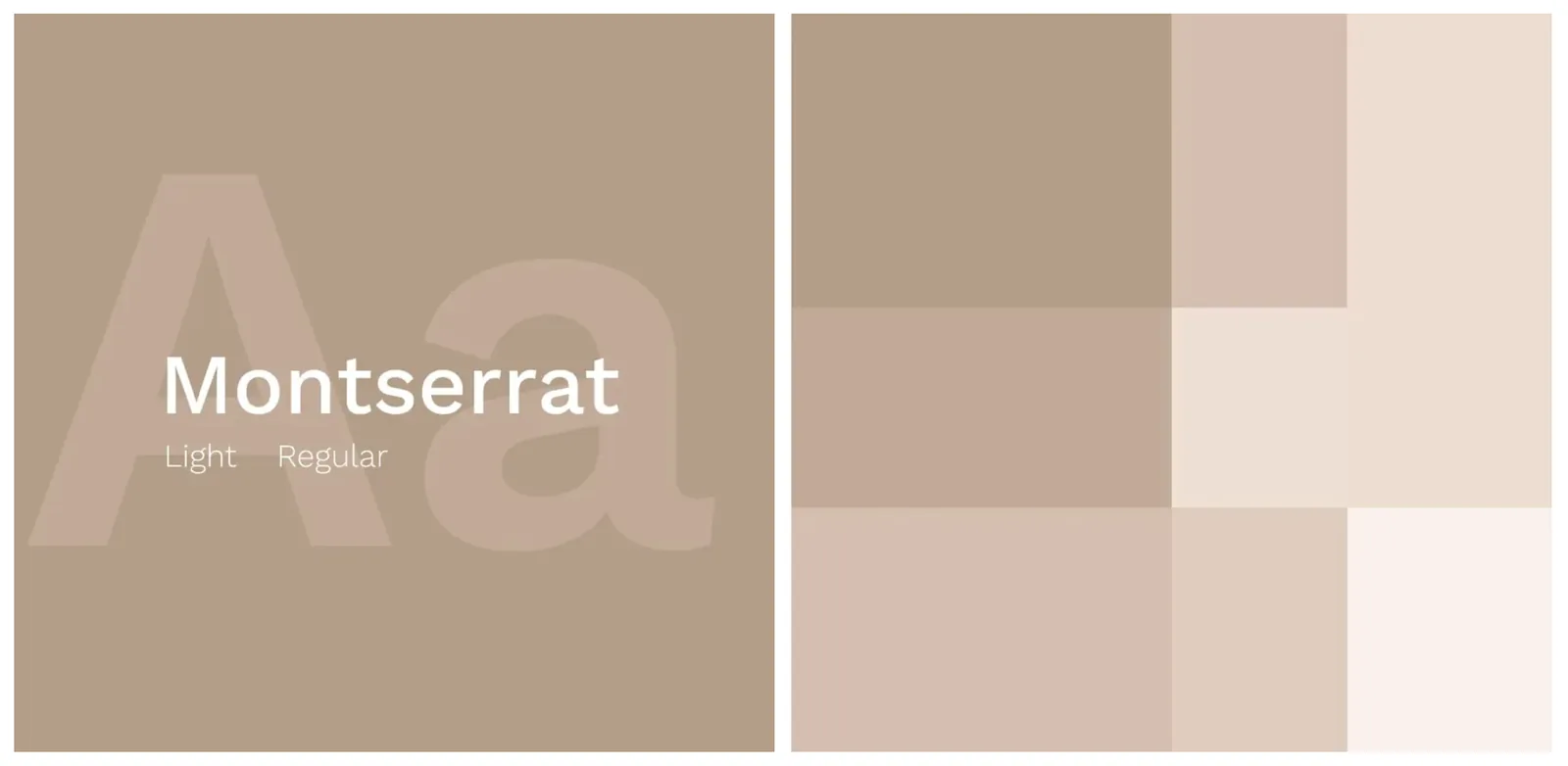
NURA, Egypt: typography and colour chosen for a clean-beauty audience, not borrowed from the clinic down the road.
Why trust is central to healthcare brand identity
Design can't manufacture trust. What it can do is make an organisation look professional, organised and approachable, and help patients find information and recognise what's official. The trust itself comes from what sits behind the brand: clinical standards, qualified people, accurate information, ethical communication, accessibility, and how patients are treated at the desk.
Branding's job is to make those qualities easy to see, without overstating them. Say a hospital positions itself around compassionate care. That promise only holds if the patient journey backs it up:
- Can patients find appointment information quickly?
- Are instructions clear?
- Does the website explain services in plain language?
- Do reception materials and signage reduce confusion?
- Does the communication feel respectful rather than salesy?
Patients meet the brand long before they meet a doctor, and they keep meeting it after they leave.
"A healthcare brand can't promise trust. It can only make the reasons for it easier to see."Generator
Hospital branding vs. clinic branding
Same industry, very different branding problems.
Hospital branding
Many audiences at once: patients, families, physicians, staff, insurers. One identity across departments, buildings, documents and signage.
Clinic branding
A focused offer for a dental, dermatology, fertility or physiotherapy audience, standing out without generic promises.
Medical group branding
Several facilities, one family. The real question is how they relate: brand architecture, not a pile of logos.
Hospitals are complicated places, and consistency is what keeps them readable. The identity has to work as reliably on a discharge form and an internal memo as it does on the façade.
Clinics usually have more freedom to shape a brand around one audience and one approach to care. The hard part is being different without leaning on medical claims nobody can check.
Medical groups have extra decisions to make. Does every clinic get its own identity? Do all sites sit under one corporate brand? Where do specialist centres fit? Get the structure right and patients can tell which facilities belong together while each service still speaks for its specialty. We go further into this in our article on building one identity across a growing business.
The healthcare branding process: from strategy to patient experience
At Generator, research, strategy, positioning, design and communication run as one process. Each stage hands something concrete to the next.
1. Healthcare brand discovery
We start with the organisation itself: services, patients, competitors, current identity, communication and business goals. For an established provider we also look at how different audiences see the brand today, from referring doctors to first-time patients. What we're looking for is the distance between the position the organisation wants and the one it's actually communicating.
2. Medical brand positioning
Positioning is the place the organisation wants to hold in people's minds. It has to be relevant, distinctive and true. A specialist clinic might lead with depth of expertise, a family health centre with access and continuity, a hospital group with breadth. The right answer depends on what the organisation can deliver every day. Our branding and positioning services tie that decision to everything that follows, and our guide to brand positioning explains the thinking in more depth.
3. Healthcare brand identity design
With the position agreed, the identity takes shape: logo and symbol, typography, colour, graphic language, photography direction, illustration and iconography, layout, and the digital and environmental applications that patients actually see.
"Healthcare identities don't all need to look clinical. Nor do they all need to be blue or green."Generator
Colour and form should come from the strategy and the audience, not from habit. A coherent brand identity design system is what makes a clinic recognisable on a booking app, a prescription bag and a building sign. (Our piece on brand identity in Egypt covers this stage across other industries.)
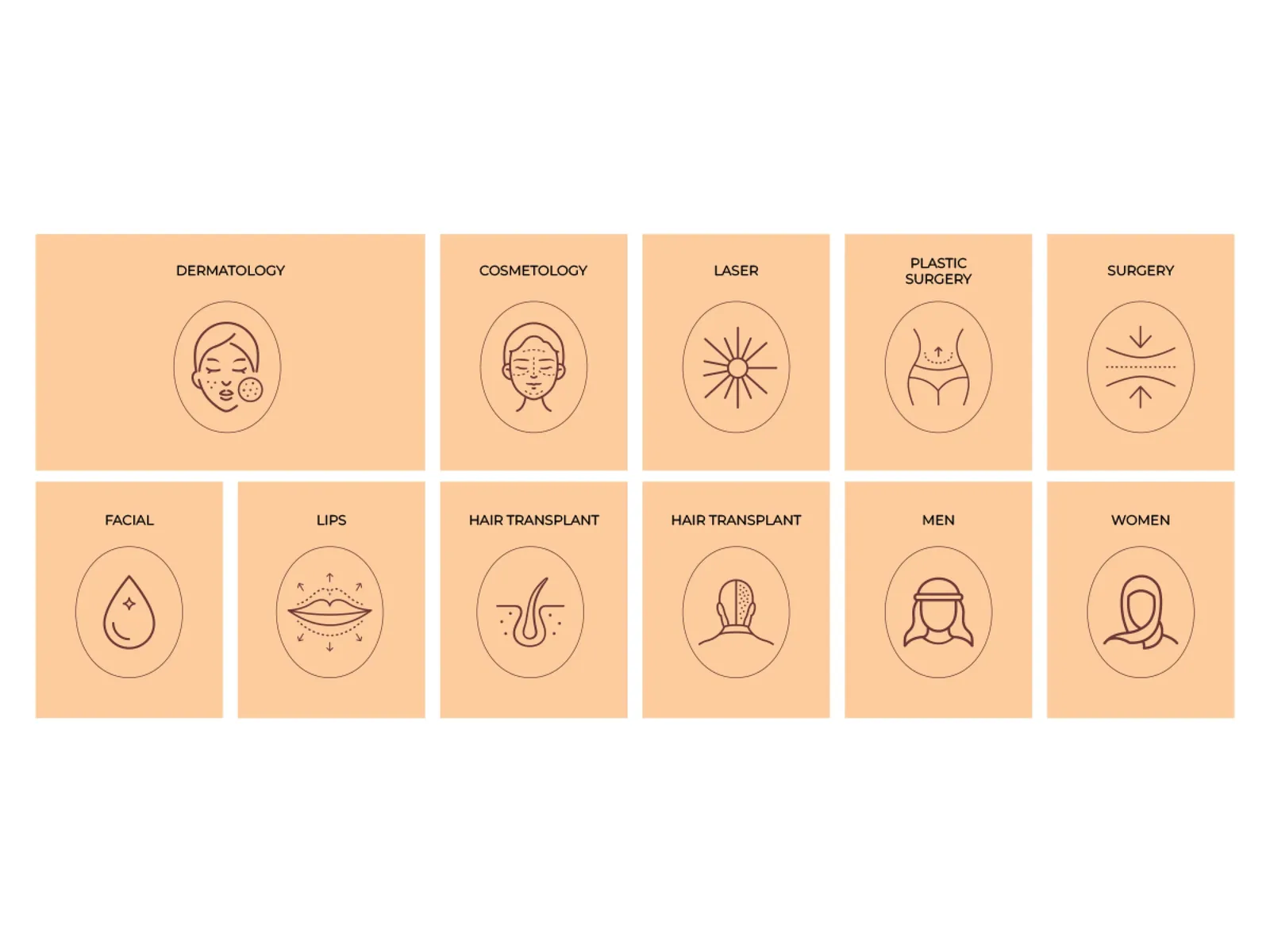
NOYA: custom service icons in place of generic medical symbols.
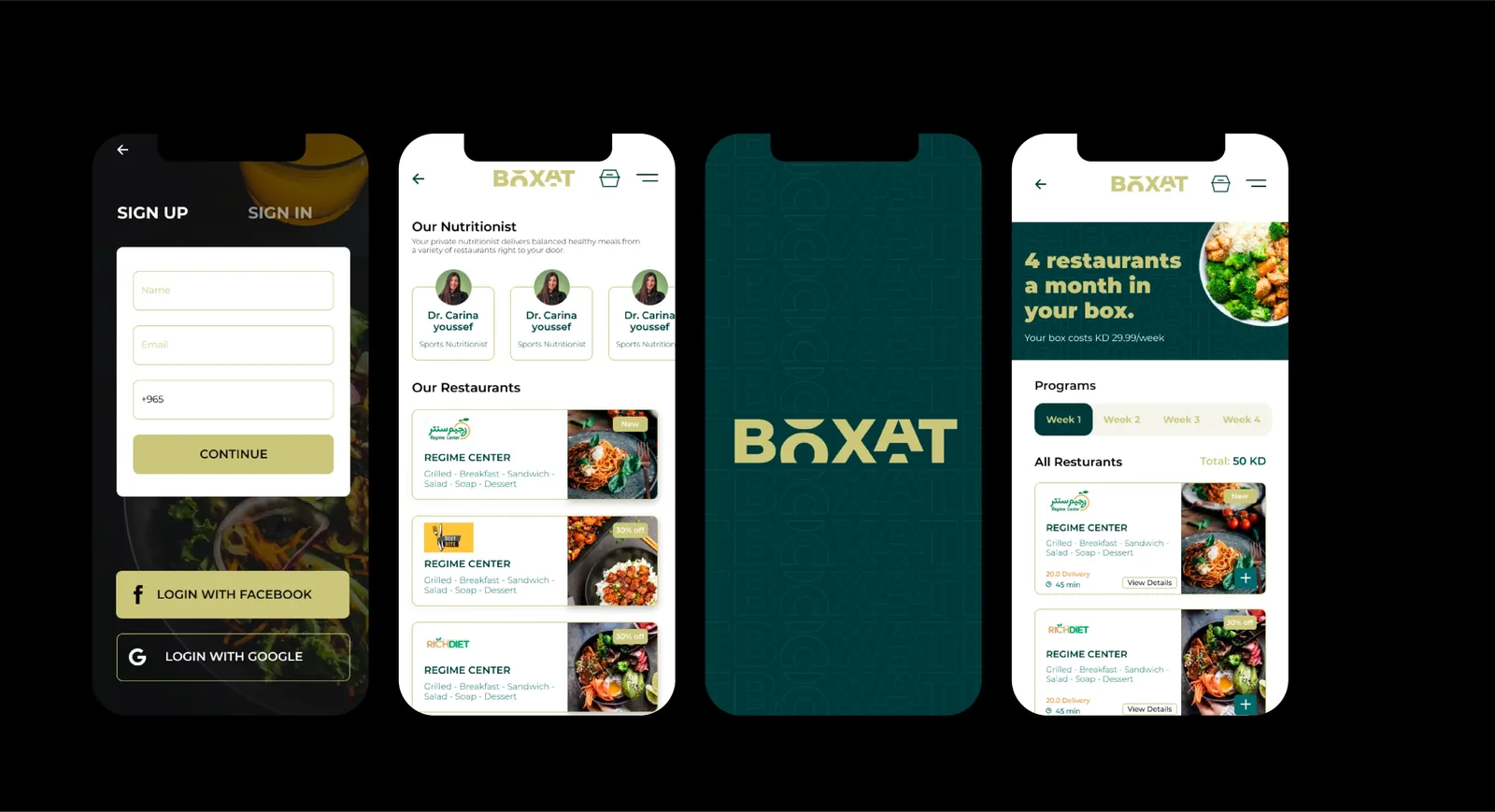
BOXAT: the identity in motion, built for app screens and social.
4. Healthcare communication and tone of voice
Medical writing is a balancing act. Too much clinical language and patients get anxious; too little and something important goes missing. A good healthcare tone of voice is clear, professional, warm and accurate. It stays away from guaranteed results, inflated treatment claims and anything that scares people into booking. The aim is an informed patient, not a pressured one.
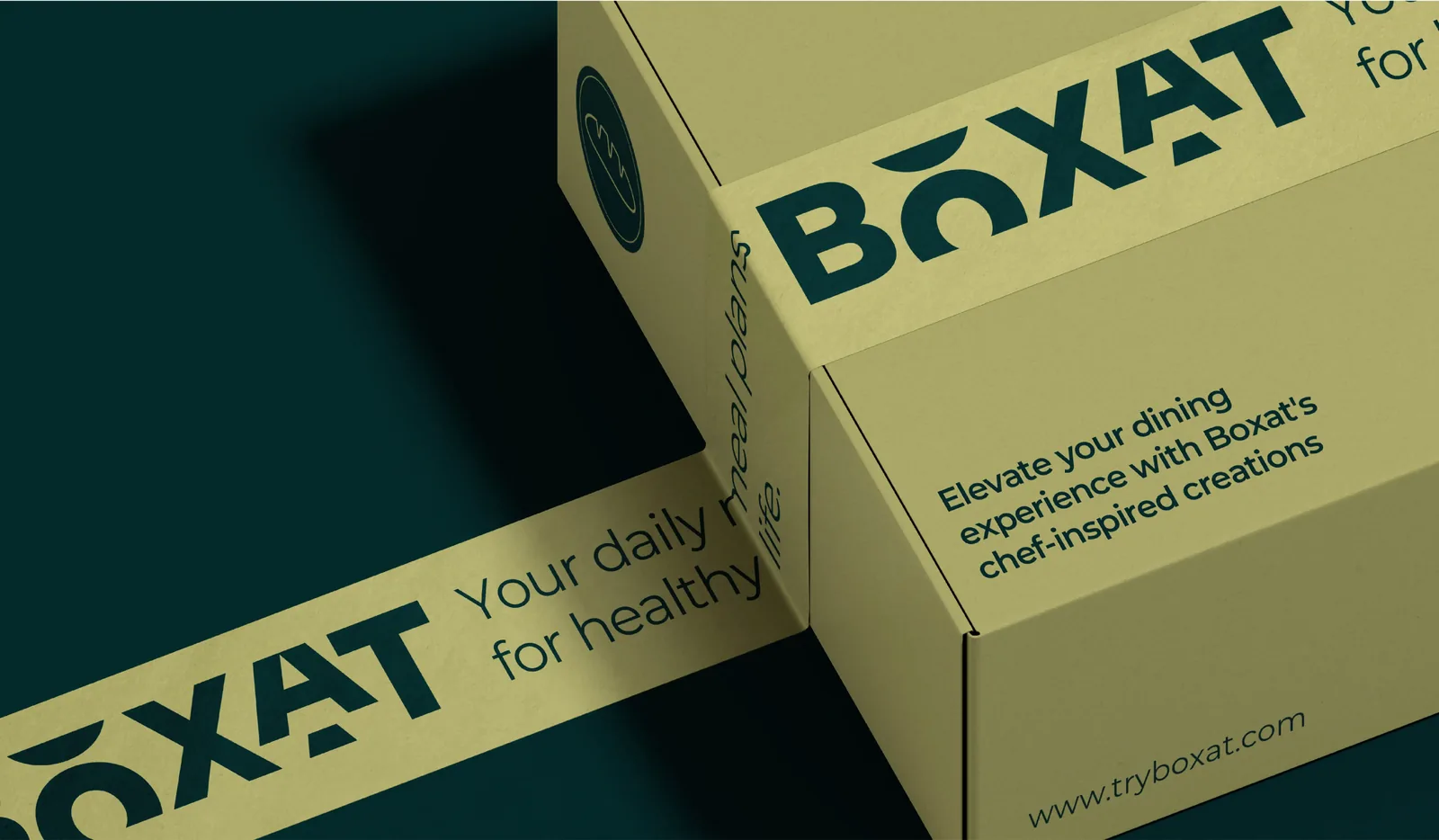
Tone of voice on pack: BOXAT speaks plainly about healthy eating, without medical claims.
5. Brand guidelines and implementation
Launch day is the easy part. After that, the brand passes through internal marketing teams, outside agencies, web developers, printers, signage suppliers and every department with a printer of its own. Without rules it frays within months. Practical brand guidelines show how the identity works across communication, digital platforms, patient materials and physical spaces, and they deal with accessibility wherever readability and wayfinding affect patients.
Healthcare rebranding: when a hospital or clinic brand needs to change
Plenty of medical brands in Egypt were designed when the organisation was a single clinic with one founder's name on the door. Ten years later there are three branches, new specialties and a partner in Riyadh, and the brand hasn't moved. That's usually when a healthcare rebranding agency gets the call. The common triggers:
- The care has outgrown the brand. Patients are surprised by how good the clinic is once they're inside.
- Growth by addition. New branches, a merger or an acquired lab, each with its own look.
- A new specialty or audience. A general clinic moving into aesthetics, fertility or day surgery.
- Expansion into Saudi Arabia or the Gulf. A brand that reads well in Cairo but not in Jeddah.
- Confusion. A name or identity that's easily mixed up with a competitor's.
Medical rebranding carries a risk other sectors don't face as sharply: patients and referring doctors rely on recognising you. Throw everything away and some of them won't find you again. A careful rebrand starts with an audit of what people already know and trust, keeps it, and rebuilds the rest around a clearer position. Our guide to working with a rebranding agency walks through the process step by step, and rebranding in Egypt covers what to look for locally.
Healthcare branding in Egypt requires bilingual thinking
Most healthcare organisations in Egypt speak to patients in Arabic and English, often on the same sign or form. For hospitals with international patients, or clinics heading into Saudi Arabia and the UAE, getting both languages right matters even more.
Translating the brochure at the end doesn't do it. The two scripts have to be designed together across typography, layout direction, navigation, signage, patient information, appointment reminders and digital interfaces. Medical terms need special care, because a patient reading their own instructions has to understand them exactly. Done well, a bilingual healthcare brand feels like one organisation. Done late, it feels like two. Our article on Arabic logo design and bilingual identity shows what designing both together looks like.
Why patient experience is part of healthcare branding
Follow one patient. She finds the clinic on Google, scans the website for a specialist, reads what's there and calls reception. A week later she parks, follows the signs, registers and waits. Every step either builds her confidence or chips away at it.
The identity helps her recognise where she is. The rest of the experience depends on information she can understand, interfaces she can use, signs that point the right way and staff communication that respects her time. This is where brand experience matters more than decoration. A reassuring look is a start; a visit that's easy to navigate is what she'll remember.
What healthcare branding looks like in practice: Generator's work
Any healthcare branding agency should be able to show its thinking turning into real, working identity systems. Here are five from our healthcare portfolio, for clients in Saudi Arabia, Kuwait, Egypt, Dubai and Italy.
NOYA
NOYA is a Saudi cosmetic and dermatology clinic offering skin, hair and body care, including laser treatments. We built the brand from the ground up: naming, strategy, visual identity, messaging and guidelines. The challenge was to feel clinically credible and still refined and approachable. Instead of the usual medical imagery, the system leans on typography, a restrained palette and custom iconography to stake out its own place in the aesthetic healthcare market.
FORMA
FORMA is a premium aesthetic shaping brand built on Italian technology, working between Italy and Dubai. Our work covered brand identity, typography, UI/UX and the website, plus a company profile and brochures, so the brand reads the same in a clinic in Dubai, a distributor's office in Italy, or on a patient's phone.
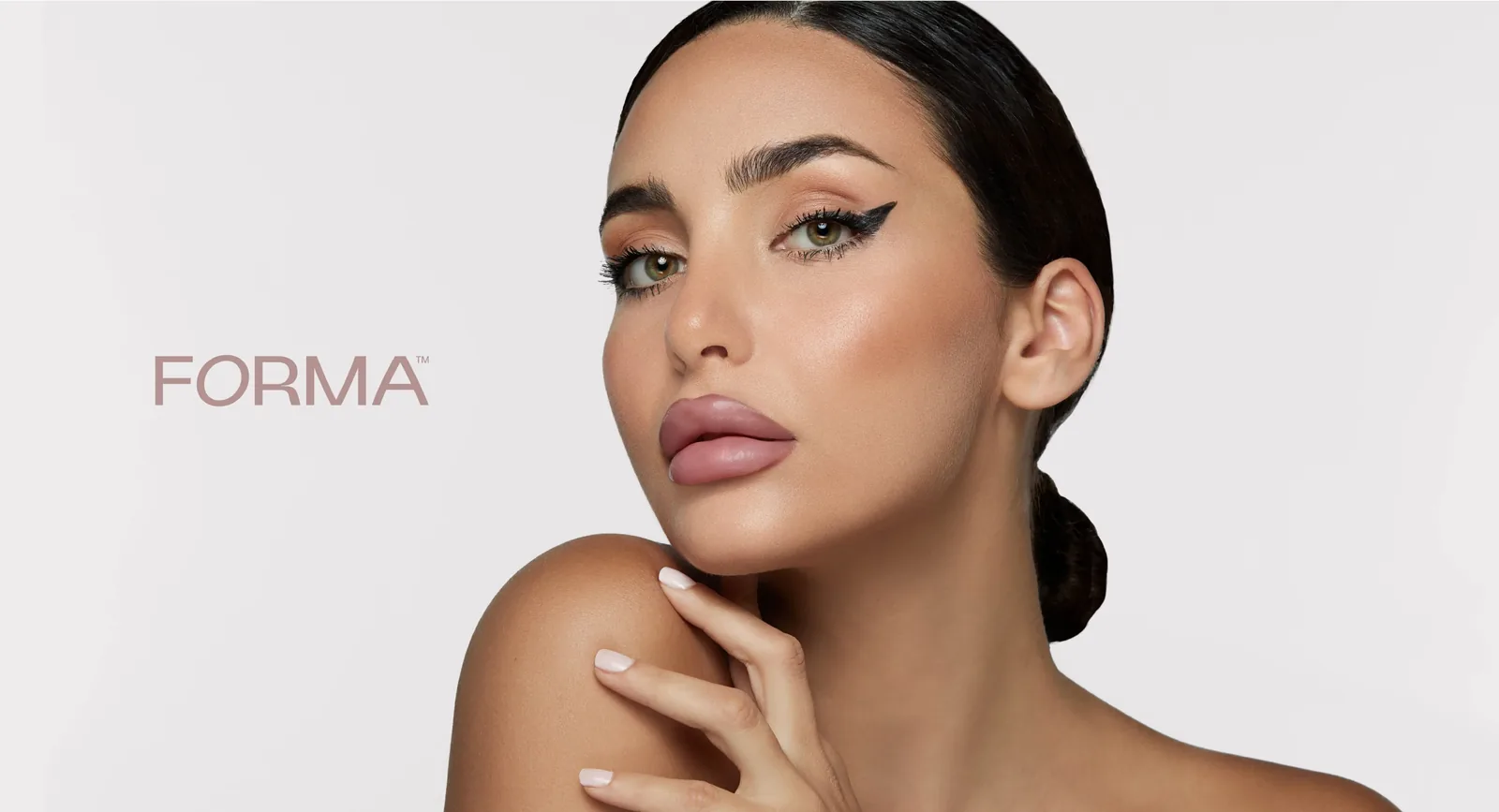
FORMA: the identity carried into the mobile website.
BOXAT
BOXAT is a smart diet food subscription in Kuwait: curated meals from several restaurants, eight diet programmes, and nutritionists built into the app, all delivered in one organised box. We created the brand strategy, identity, packaging, iconography, mobile app UI/UX and motion. The icon set had to do real work, marking meals as keto, gluten-free, diabetes-friendly or dairy-free at a glance, which is exactly the kind of clarity health-conscious customers need before they order.
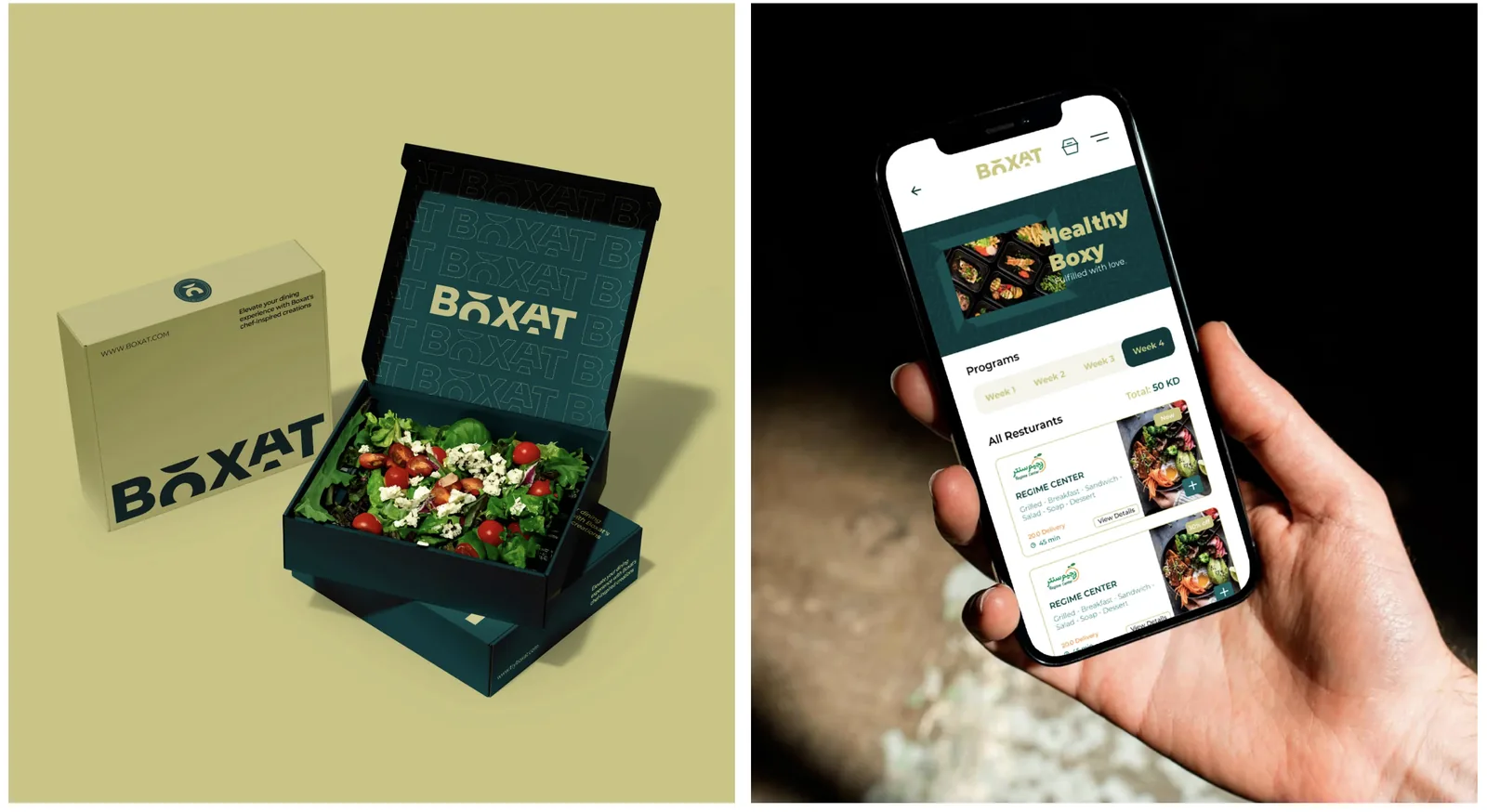
BOXAT iconography: diet labels patients and customers can read in a second.
Noleek and NURA
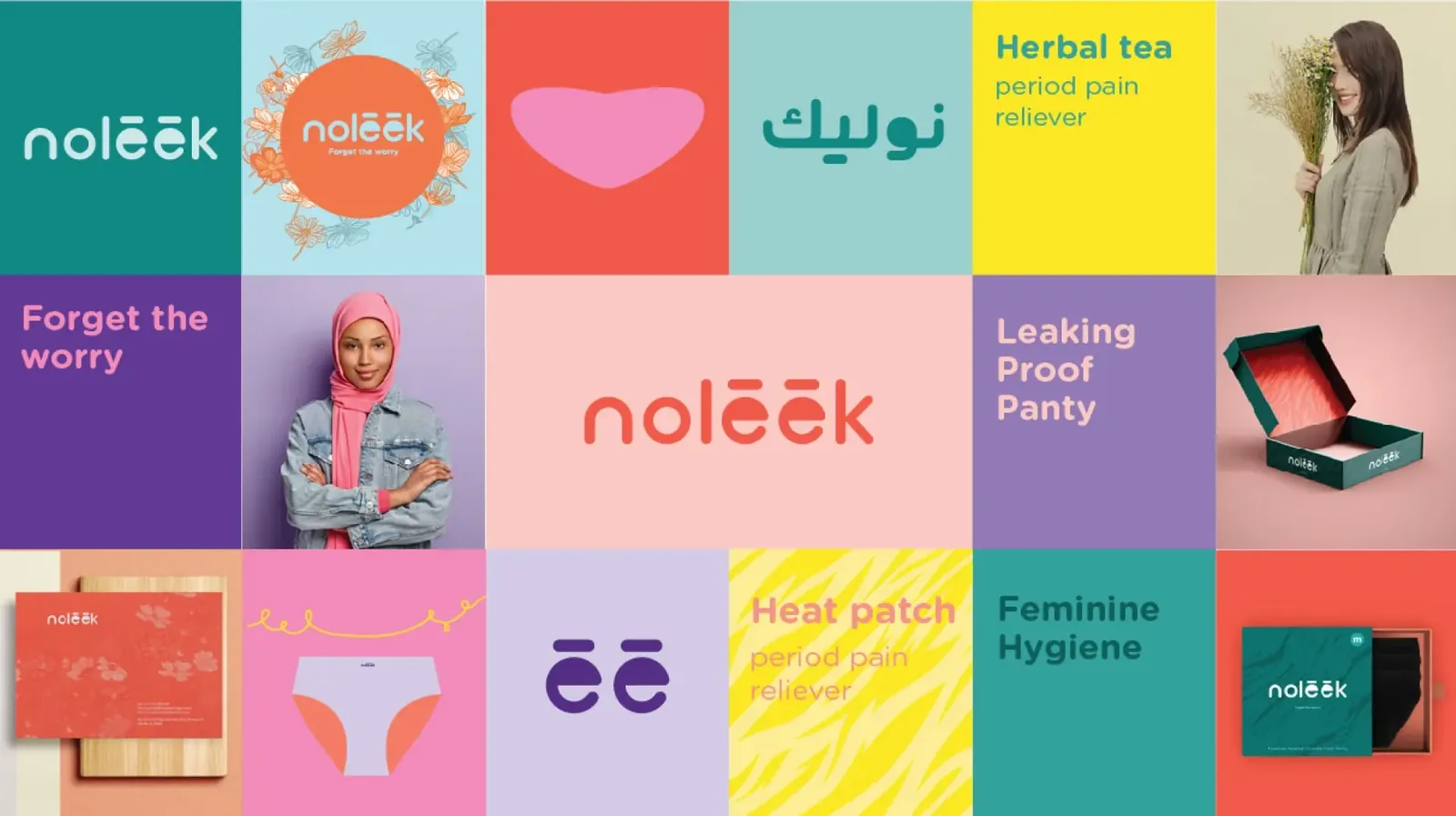
Healthcare branding reaches beyond clinics. Noleek is a Saudi feminine care brand; we created its name, identity, packaging and messaging. NURA is an Egyptian clean-beauty skin, hair and body care line whose identity and packaging needed to feel natural and trustworthy on a pharmacy shelf.

How to choose a healthcare branding agency in Egypt
A good-looking medical portfolio is the starting point, not the deciding factor. Before you sign, ask how the agency handles the parts of healthcare communication that are hard:
- Can it tell clinical credibility apart from visual polish, and deliver both?
- Can it build identities that work in Arabic and English?
- Does it think about accessibility and the patient journey?
- Can it handle several facilities or specialties under one system?
- How does it keep messaging free of unsupported medical claims?
- Can it explain why its work looks the way it does?
Most of all, listen for whether it understands what your organisation can honestly promise patients. For a broader comparison, see our shortlist of branding agencies in Egypt and our guide to matching your brand problem to the right partner.
How much does healthcare branding cost in Egypt?
There's no standard price, because the briefs vary so much. A new dental clinic that needs a name, an identity and basic guidelines is a different job from a hospital group that needs research, positioning, brand architecture, bilingual communication, environmental design and a new website. The number of facilities, stakeholders, languages and applications all move the cost. When you compare proposals, skip the count of logo concepts and guideline pages and ask a better question: which one actually deals with your problem?
Why choose Generator Design Agency for healthcare branding in Egypt
Not every healthcare organisation needs a full branding programme, and we'll say so. If your clinic already has a strong identity and needs social media production, a specialist content team will serve you better. If the goal right now is filling appointment slots through advertising, talk to a healthcare performance marketing agency.
We're the right call when the challenge is how the organisation is positioned, recognised and experienced: launching a new clinic, bringing a medical group under one identity, rebranding an established hospital, building a bilingual brand for Saudi Arabia, or making the experience consistent from website to waiting room. Our branding services connect strategy, design, communication and digital experience for exactly that kind of work, and you can see the range in our portfolio.
Common questions
What does a healthcare branding agency do?
A healthcare branding agency develops the strategy, positioning, naming, identity, messaging and brand experience of medical organisations, including hospitals, clinics, medical centres and healthcare groups.
Why is branding important for hospitals and clinics?
Branding helps healthcare organisations explain their services, build recognition, stay consistent and make patient information easier to understand. Trust still depends on clinical quality, ethical practice and the real patient experience.
What is the difference between healthcare branding and healthcare marketing?
Healthcare branding defines how an organisation is perceived and recognised. Healthcare marketing promotes its services and reaches prospective patients through advertising, content and digital campaigns.
When should a hospital or clinic consider rebranding?
Common reasons include adding branches or specialties, a merger, expansion into Saudi Arabia or the Gulf, an identity that no longer matches the quality of care, or confusion with a competitor. A good healthcare rebrand keeps the recognition patients already have and rebuilds the rest around a clearer position.
Can healthcare branding include Arabic and English?
Yes. Bilingual healthcare branding can include typography, logo systems, layouts, signage, digital interfaces and communication principles designed for both Arabic and English audiences.
How much does healthcare branding cost in Egypt?
Costs depend on the organisation's size, research needs, number of facilities, strategic scope, identity complexity, bilingual requirements and implementation support.
Does Generator Design Agency have healthcare branding experience?
Yes. Generator's healthcare portfolio includes NOYA, FORMA, BOXAT, Noleek and NURA, covering naming, strategy, identity design, messaging, packaging, iconography and digital applications for clients in Saudi Arabia, Kuwait, Egypt, the UAE and Italy.
Building or rebranding a healthcare brand?
Tell us about your clinic, hospital or medical group, and we'll tell you honestly what kind of branding work it needs, even if that isn't us. Generator works with healthcare brands in Egypt, Saudi Arabia, the UAE and across MENA.
Explore our healthcare work Start a conversationGenerator Design Agency · Cairo, Egypt · Working across Egypt, Saudi Arabia, the UAE & MENA · See more work · Our services